
Mahiyanganaya Temple Travel Guide: History, Location & Tips
 By Axel Donovan
| Update on: Jul 20, 2026
By Axel Donovan
| Update on: Jul 20, 2026
Mahiyanganaya Temple is one of the oldest and most sacred Buddhist temples in Sri Lanka. Located in the peaceful town of Mahiyanganaya in the Badulla District, this historic temple attracts both pilgrims and international visitors seeking to experience Sri Lanka's rich Buddhist heritage.
Unlike the busier temples in Kandy or Anuradhapura, Mahiyanganaya offers a tranquil atmosphere where visitors can admire ancient architecture, learn about Buddhist traditions, and enjoy the scenic surroundings of Sri Lanka's hill country.
Whether you are planning a cultural tour or a spiritual journey, Mahiyanganaya Temple deserves a place on your Sri Lanka itinerary.
- Quick Facts About Mahiyanganaya Temple
- Where is Mahiyanganaya Temple?
- Why is Mahiyanganaya Temple Famous?
- History of Mahiyanganaya Temple
- What to See on Site: Highlights of Mahiyanganaya Temple
- Best Time to Visit Mahiyanganaya Temple
- How to Get to Mahiyanganaya Temple
- Nearby Attractions: What to Combine It With
- Travel Tips for Visitors
- Why Include Mahiyanganaya Temple in Your Sri Lanka Itinerary?
- Frequently Asked Questions About Mahiyanganaya Temple
Quick Facts About Mahiyanganaya Temple
| Location | Mahiyanganaya town, Badulla District, Uva Province |
| Distance from Kandy | Approximately 70–75 km (about 2–2.5 hours by road) |
| Distance from Colombo | Approximately 225 km (5–6 hours by road) |
| Opening hours | The temple is generally open from early morning until evening. Opening hours may vary during religious festivals and special ceremonies. |
| Entrance fee | Generally FREE for worshippers and visitors, although donations are appreciated. |
| Dress code | Shoulders and knees covered; shoes removed before entering the stupa platform |
| Best time to visit | Early morning or Duruthu Poya (January) / Ala Perahera season |
| Nearby attractions | Dambana Vedda village, Sorabora Wewa, Maduru Oya National Park |
Where is Mahiyanganaya Temple?
Mahiyanganaya Temple is situated in Mahiyanganaya town, approximately:
- 73 km from Kandy
- 58 km from Badulla
- 230 km from Colombo
- Around 2.5–3 hours by road from Kandy
The temple lies near the Mahaweli River and serves as an excellent stop for travelers exploring eastern Sri Lanka, the Knuckles Mountain Range, or Wasgamuwa National Park.
Its central location also makes it easy to include in a road trip between Kandy, Ella, and the eastern coast.
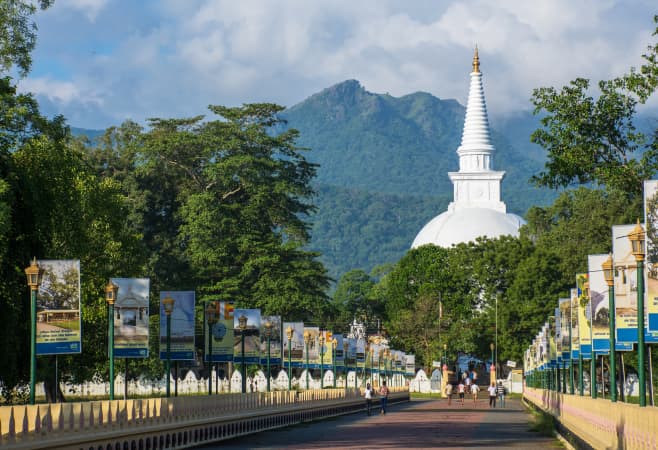 The iconic white stupa of Mahiyanganaya Temple
Why is Mahiyanganaya Temple Famous?
Mahiyanganaya Temple, officially known as Mahiyangana Raja Maha Viharaya, is regarded as one of the Solosmasthana, the sixteen most sacred Buddhist pilgrimage sites in Sri Lanka—the country's sixteen most sacred Buddhist sites.
According to Buddhist tradition:
- Mahiyanganaya was the first place visited by the Buddha after his enlightenment.
- During this visit, Buddha is said to have preached peace among local tribes.
- A lock of Buddha's hair was enshrined here, making it one of the earliest Buddhist shrines in Sri Lanka.
- The original stupa was later enlarged by kings throughout Sri Lankan history.
- For many Buddhists, visiting Mahiyanganaya is both a pilgrimage and a deeply spiritual experience.
History of Mahiyanganaya Temple
The temple's origins date back more than 2,500 years. Historical records and Buddhist chronicles state that after Buddha's visit, the deity Saman built a small shrine to preserve a sacred relic. Over the centuries, successive Sri Lankan rulers expanded the temple.
Several ancient kings contributed to its development, including:
- King Devanampiya Tissa
- King Dutugemunu
- King Voharika Tissa
The temple has undergone numerous restorations while preserving its religious importance. Today, the magnificent white stupa remains the centerpiece of the complex.
What to See on Site: Highlights of Mahiyanganaya Temple
The Sacred Stupa
The impressive white dagoba dominates the temple grounds and houses sacred relics associated with the Buddha.
Visitors often walk clockwise around the stupa while offering flowers and saying prayers.
Ancient Temple Buildings
The complex includes:
- Prayer halls
- Buddha statues
- Shrines
- Meditation areas
- Traditional murals depicting Buddhist stories
The peaceful setting makes it ideal for quiet reflection.
Religious Ceremonies
Visitors may witness:
- Morning and evening chanting
- Flower offerings
- Oil lamp ceremonies
- Pilgrims dressed in white participating in religious observances
Experiencing these rituals offers insight into everyday Buddhist life in Sri Lanka.
Peaceful Atmosphere
Compared with some of Sri Lanka's major tourist sites, Mahiyanganaya Temple remains relatively uncrowded, allowing visitors to enjoy a more authentic cultural experience.
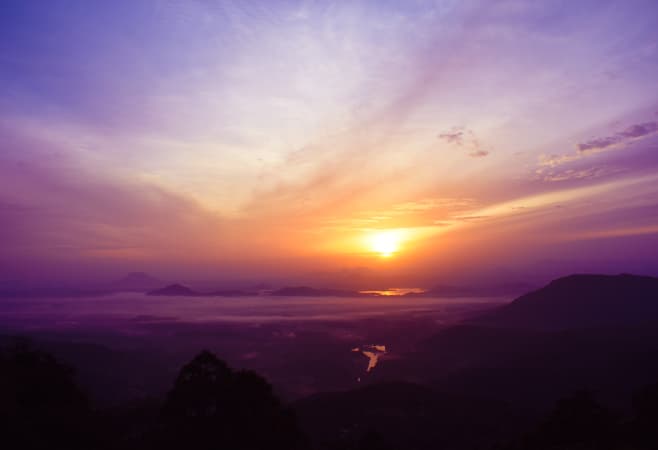 The calm ambiance of Mahiyanganaya Raja Maha Vihara as the sun rises
Best Time to Visit Mahiyanganaya Temple
Mahiyanganaya Weather
Weather-wise, Mahiyanganaya sits in a drier zone than the hill country proper, so it's a reasonably comfortable year-round visit, though the hottest stretch (roughly June to September) can make the uncovered stupa terrace uncomfortable by midday.
Best time for Buddhist festivals
During Buddhist festivals, it offers a unique cultural experience, although the temple can become considerably busier. For a more atmospheric visit, time it around:
- Duruthu Poya (January full moon) marks the anniversary of the Buddha's traditional first visit and draws devotees from across the region.
- Ala Perahera — the temple's own procession, tied to the Vedda community's veneration of the god Saman, is typically held later in the year with drumming, dancing, and torchlit processions through the temple grounds.
- If festivals aren't your priority, go early — arriving by 7 or 8 AM means cooler temperatures, softer light for photos, and the chance to see monks conducting the first rituals of the day before tour groups arrive.
Best time of day
- Early morning for cooler temperatures
- Late afternoon for softer lighting and fewer visitors
Opening Hours
The temple is generally open daily from early morning until evening, approximately 6:00 AM – 6:00 PM. Hours may vary during religious festivals and special ceremonies.
Entrance Fee
Entry to Mahiyanganaya Temple is usually free, although donations are welcome to help maintain the temple. Visitors may choose to make voluntary offerings when entering prayer areas.
How to Get to Mahiyanganaya Temple
By Car
Hiring a private driver is the easiest option, especially if visiting from Kandy or Ella.
Driving allows flexibility to combine nearby attractions into a day trip.
By Bus
Regular buses connect Mahiyanganaya with:
- Kandy
- Badulla
- Colombo
- Polonnaruwa
The temple is only a short tuk-tuk ride or walk from the town center.
By Organized Tour
Some cultural heritage tours include Mahiyanganaya together with:
- Kandy
- Dambana Vedda Village
- Wasgamuwa National Park
- Knuckles region
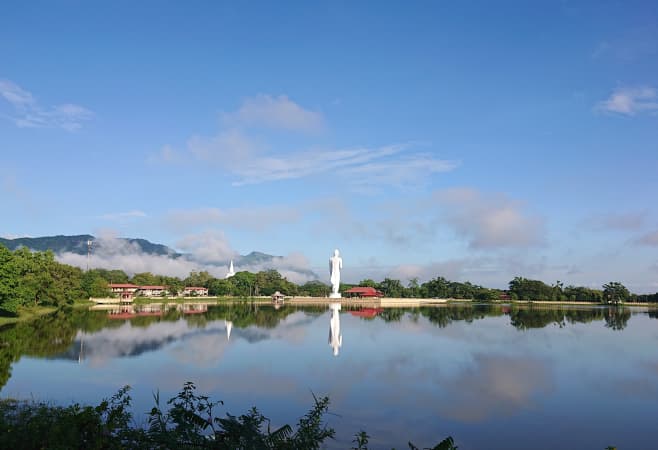 Visitors to Mahiyanganaya Temple can explore one of the island's most revered Buddhist heritage sites
Nearby Attractions: What to Combine It With
Because Mahiyanganaya sits off the main tourist corridor, almost nobody visits it in isolation — it works best as part of a half-day or full-day loop:
- Dambana Vedda Village - roughly 20 minutes from the temple - is where Sri Lanka's remaining indigenous Vedda community shares their history, hunting traditions, and way of life with visitors. Many guided tours combine the temple and village into a single half-day trip.
- Sorabora Wewa — an ancient reservoir attributed to King Dutugemunu's era, good for a short boat ride and birdwatching, with a distinctive rock-cut sluice gate.
- Maduru Oya National Park — for travelers with an extra day, this park offers elephant sightings with far fewer vehicles than Yala or Udawalawe.
- Ravana Falls and the Ella area — if you're routing between the hill country and the east, Mahiyanganaya slots naturally into that drive.
Travel Tips for Visitors
To make the best of your trip:
- Come during early morning, before the heat of the day.
- Bring drinking water.
- Bring cash for making donations or making small purchases.
- Use comfortable shoes that can be easily removed.
- Honor local traditions and current religious practices.
- Enjoy a day trip and tour the temple along with other cultural and natural sites.
Why Include Mahiyanganaya Temple in Your Sri Lanka Itinerary?
Mahiyanganaya Temple has far more than a historical value. It offers travellers a chance to come and experience a living Buddhist tradition at a tranquil location, free of larger crowds of visitors. Its blend of religious legacy, architectural grandeur, and natural beauty makes it a captivating place for visitors to enjoy and learn about Sri Lanka's culture, history, and spirituality.
Mahiyanganaya Temple presents a rewarding experience, providing deeper insights into Sri Lanka's religious heritage, whether you are in the Cultural Triangle or on a drive through the central highlands or towards Sri Lanka's eastern part.
Frequently Asked Questions About Mahiyanganaya Temple
Is Mahiyanganaya Temple worth visiting?
Yes. It is one of Sri Lanka's most important Buddhist pilgrimage sites and offers a peaceful atmosphere, fascinating history, and impressive architecture that appeal to both pilgrims and cultural travelers.
How much time should I spend at Mahiyanganaya Temple?
Most visitors spend 1 to 2 hours exploring the temple complex, attending prayers, and enjoying the surrounding scenery. Add another two to three hours if you're combining it with the Dambana Vedda village and Sorabora Wewa, which most people do.
Can non-Buddhists visit Mahiyanganaya Temple?
Absolutely. Visitors of all religions are welcome, provided they dress modestly, follow temple etiquette, and respect religious practices.
Is photography allowed inside the temple?
Photography is generally permitted in outdoor areas. However, avoid photographing worshippers during ceremonies, never pose with your back directly facing Buddha statues, and always follow any posted restrictions.
Can I visit Mahiyanganaya Temple as a day trip from Kandy?
Yes. The temple is approximately 2.5 to 3 hours from Kandy by road, making it possible as a full-day excursion, especially when combined with attractions such as Dambana Vedda Village or Wasgamuwa National Park.
Do I need a guide?
Not strictly, but a local guide adds real value here since the site's history isn't as well signposted in English as at more touristed temples, and a guide can also arrange the Vedda village visit properly, including permission from the village chief.
Related Articles
- Sri Lanka Wildlife Guide: National Parks, Safari Experiences & Best Times to Visit
- Traveling From Colombo to Sigiriya: Routes, Costs & Tips
- Wilpattu National Park Guide: Everything You Need to Know
- SriLankan Airlines Travel Guide: Services, Routes & Travel Tips
- Thalpe Beach Guide: Location, Best Things to Do & Travel Tips
- Travel Sri Lanka with Kids: Best Places, Itinerary & Travel Tips
- Galle Weather Guide: Climate, Seasons, and Travel Tips
- Best Way to Travel from Colombo to Kandy, Routes & Costs
- Mihintale Temple Travel Guide: What to See & When to Visit

HOW CAN WE HELP?
 NEED HELP 24/7
 United States
+1 949 346 9868
United States
+1 949 346 9868
 United Kingdom
+44 0330 822 7696
United Kingdom
+44 0330 822 7696
 Singapore
+65 6485 3630
Singapore
+65 6485 3630
 Viber
+65 8174 8526
Viber
+65 8174 8526

APPLY WITH CONFIDENCE


|
|||


