
Mihintale Temple Travel Guide: What to See & When to Visit
 By Axel Donovan
| Update on: Feb 26, 2026
By Axel Donovan
| Update on: Feb 26, 2026
Mihintale, known as "Mahinda's Hill," is one of Sri Lanka's most sacred Buddhist pilgrimage sites and a pivotal landmark in the country's religious and cultural history. Traveling to Mihintale offers a unique combination of spiritual heritage, archaeological wonders, and scenic hilltop views.
This guide provides everything you need to know to plan a meaningful and comfortable visit to Mihintale.
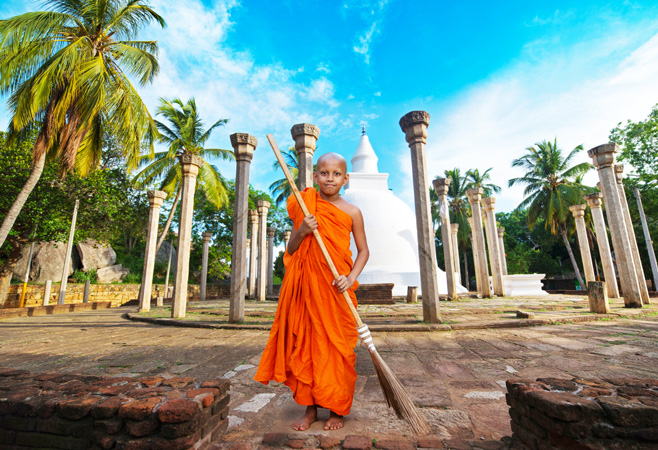 The Ambasthala Dagoba platform in Mihintale is a sacred Solosmasthana site central to Poson Poya pilgrimages
Where Is Mihintale Located?
Mihintale is located in north-central Sri Lanka, approximately 12 km east of Anuradhapura, the country’s first ancient capital. The site sits on a rocky hill rising above the surrounding plains, making it visible from a distance and easy to access from major cultural hubs.
Province: North Central Province
Nearest city: Anuradhapura
Distance from Colombo: About 220 km
Mihintale is commonly visited as a half-day trip from Anuradhapura or included in a Cultural Triangle itinerary.
Historical Significance
Mihintale marks the birthplace of Buddhism in Sri Lanka. In 247 BCE (during the 3rd century BC), Arahat Mahinda—son of Indian Emperor Ashoka—arrived here and met King Devanampiya Tissa. This encounter led to the king's conversion and the establishment of Buddhism on the island, an event commemorated annually during Poson Poya (full moon in June). The site features ancient monasteries, stupas, caves, and inscriptions that testify to over 2,000 years of Buddhist heritage.
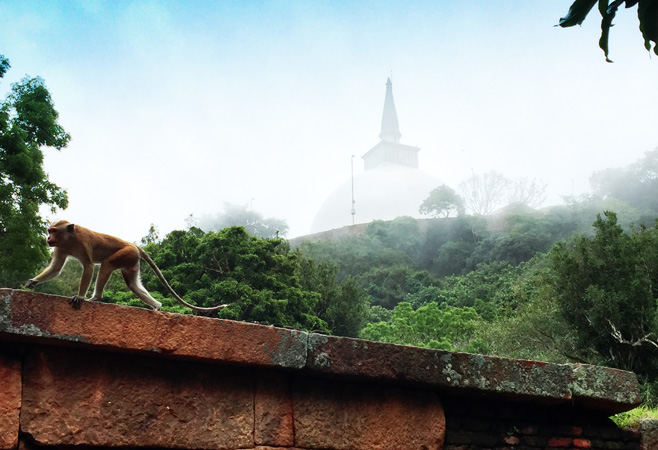 Iconic white Maha Seya Stupa atop Mihintale hill is a key pilgrimage site marking the birthplace of Buddhism in Sri Lanka.
Major Attractions and Things to Do in Mihintale
The highlight is the climb up the 1,840 ancient rock-cut steps (some paved with granite), which are called Mihintale Stairs. While the climb is gradual, it requires moderate fitness. Along the way, you’ll encounter shrines, resting points, and shaded areas. a gradual and shaded ascent with stops at ruins along the way. Key sites include:
Ambasthala Dagoba (Sela Cetiya)
A small, elegant white stupa believed to mark the exact spot of Mahinda's meeting with the king, surrounded by ancient stone pillars. Located near the top, this stupa remains one of the most sacred areas within the complex.
Aradhana Gala (Mihintale Rock / Meditation Rock)
The flat rock summit, where Arahat Mahinda delivered his first sermon, offers panoramic views of the surrounding jungle and plains. A short additional climb leads here.
Maha Seya
The large main stupa (dagoba) on the terrace.
Seated Buddha Statue: A prominent white statue overlooking the landscape, reachable by another flight of steps.
Kantaka Chetiya
One of the oldest stupas in Sri Lanka, Kantaka Chetiya, is known for its detailed stone carvings and historical importance.
Ancient Hospital Ruins
Mihintale is home to one of the world’s oldest known hospitals, showcasing advanced medical practices in ancient Sri Lanka.
Other highlights
- The 68 caves used by early monks
- The Alms Hall (refectory)
- Lion Pond
- Naga Pokuna (snake pond)
- Ancient rock inscriptions
Allow 2–4 hours to explore fully. The site combines active worship areas with archaeological ruins.
How to Get to Mihintale
Mihintale lies approximately 12–17 km east of Anuradhapura, making it an easy day trip.
From Anuradhapura
Public buses run frequently from the new bus stand (about 30–50 LKR, 20–30 minutes).
Tuk-tuks or taxis cost 500–1,500 LKR one way; cycling or scooter rental is popular for flexibility.
From Colombo
Train: Take the Northern Line train to Anuradhapura (4–5 hours, scenic and affordable).
Buses or private transfers take 4–5 hours by road.
Mihintale is well signposted, and the access road is in good condition.
From Bandaranaike International Airport (CMB)
Private transfers or taxis take about 4.5 hours (around 210–230 km).
Local transport options include buses toward Trincomalee—ask the driver for the Mihintale stop.
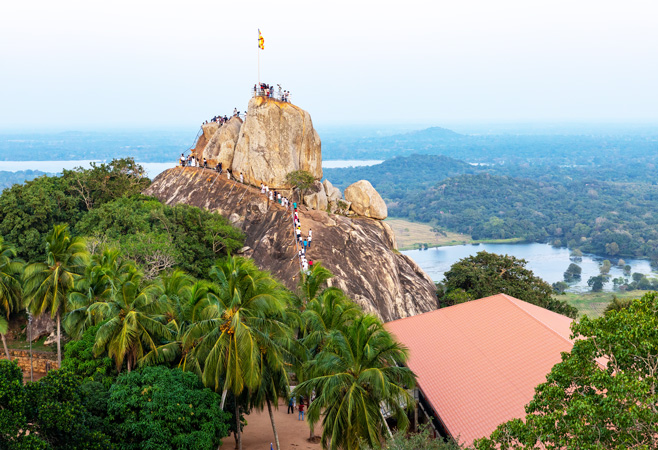 Pilgrims climbing the famous rock steps to Aradhana Gala (Invitation Rock) at Mihintale
Best Time to Travel to Mihintale
The best time to visit Mihintale is during the dry season from May to September, when the weather is sunny and ideal for climbing the stone steps and exploring the ruins.
- May–September: Dry and clear, excellent visibility and easier access
- October–January: Occasional rain showers due to monsoon patterns
- February–April: Very hot and dry; visit early morning or late afternoon
Poson Poya (June full moon) is the most important religious festival at Mihintale, attracting thousands of pilgrims. While it offers a vibrant cultural atmosphere, expect large crowds and limited parking.
Timing to Visit
Opening hours: Generally from early morning (around 7:00 AM) until sunset. Visit early morning (7–10 AM) or late afternoon (4–7 PM) to avoid intense midday heat—the stone terraces and steps can become very hot underfoot.
Entrance Fees and Opening Hours
Opening hours: Typically from early morning until sunset
Entrance fee: Approximately 1,000 LKR for foreign adults (children under 12 often free); Sri Lankan citizens enter free or at a reduced rate
Tickets are usually purchased at the main entrance near the base of the stairs
Fees may vary, so it is advisable to check locally on the day of your visit.
Practical Tips for Visitors
Dress Code & Etiquette: Cover shoulders and knees; remove shoes and socks on terraces and sacred areas (ground can be hot—consider socks). Be respectful during prayers or ceremonies.
What to Bring: Water, sunscreen, hat, comfortable shoes, camera/phone. Monkeys are common—secure belongings.
Accessibility: The climb is moderate but steep in parts; not wheelchair-friendly. Taxis can drop off closer to the upper car park.
Guides: Optional (around 800–1,500 LKR for a tour); self-guided is feasible with signage and maps.
Crowds & Safety: Quieter than Anuradhapura; avoid Poya days if seeking solitude. Stay hydrated and pace yourself.
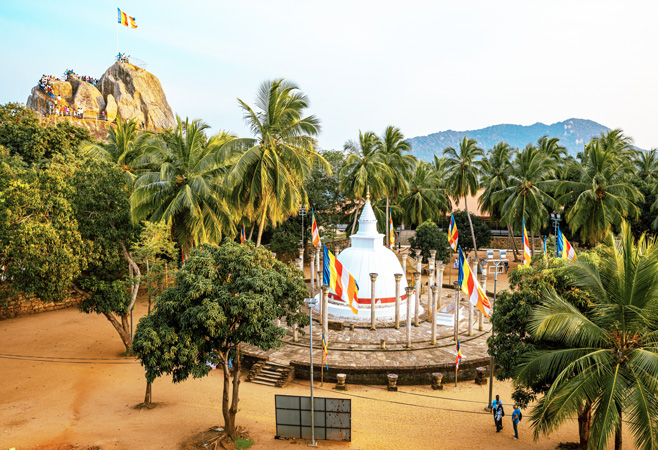 The Ambasthala Dagoba platform in Mihintale – small white stupa encircled by pillars
Is Mihintale Worth Visiting?
Yes. Traveling to Mihintale is highly rewarding for anyone interested in Buddhist heritage, ancient history, or peaceful cultural experiences. Compared to larger archaeological sites, Mihintale feels more intimate and spiritual, offering visitors a deeper connection to Sri Lanka’s past.
Whether you are on a religious pilgrimage or exploring the Cultural Triangle, Mihintale is a destination that should not be missed.
Final Thoughts on Traveling to Mihintale
Mihintale is more than a historical site—it is a living symbol of Sri Lanka’s spiritual roots. With its sacred monuments, scenic hilltop setting, and profound cultural significance, traveling to Mihintale offers an experience that is both educational and inspiring.
For travelers seeking authenticity, history, and tranquility, Mihintale stands out as one of Sri Lanka’s most meaningful destinations.
Related Articles
- Sri Lanka Wildlife Guide: National Parks, Safari Experiences & Best Times to Visit
- Mahiyanganaya Temple Travel Guide: History, Location & Tips
- Traveling From Colombo to Sigiriya: Routes, Costs & Tips
- Wilpattu National Park Guide: Everything You Need to Know
- SriLankan Airlines Travel Guide: Services, Routes & Travel Tips
- Thalpe Beach Guide: Location, Best Things to Do & Travel Tips
- Travel Sri Lanka with Kids: Best Places, Itinerary & Travel Tips
- Galle Weather Guide: Climate, Seasons, and Travel Tips
- Best Way to Travel from Colombo to Kandy, Routes & Costs

HOW CAN WE HELP?
 NEED HELP 24/7
 United States
+1 949 346 9868
United States
+1 949 346 9868
 United Kingdom
+44 0330 822 7696
United Kingdom
+44 0330 822 7696
 Singapore
+65 6485 3630
Singapore
+65 6485 3630
 Viber
+65 8174 8526
Viber
+65 8174 8526

APPLY WITH CONFIDENCE


|
|||


